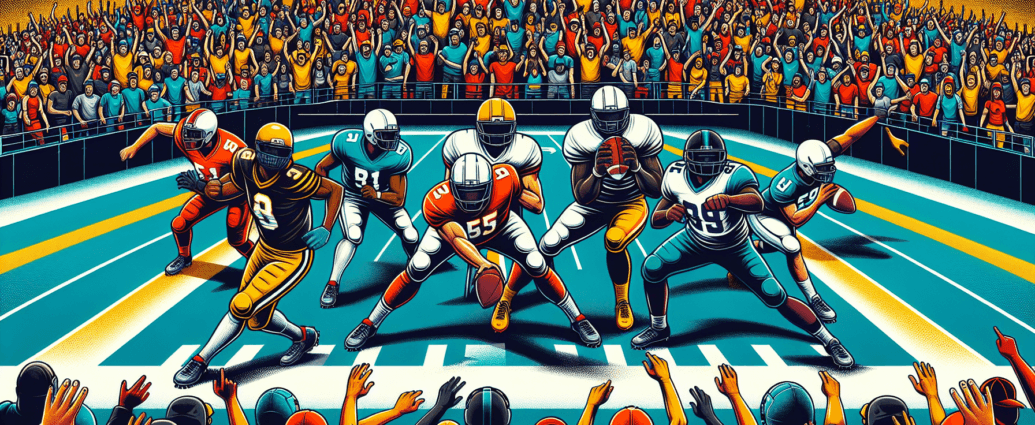

American football is more than a sport in the United States; it is a cultural phenomenon that blends strategy, athleticism, and spectacle into a weekly rhythm that many fans treat as a shared ritual. From the first whistle of late summer training camps to the crescendo of the Super Bowl, the game we call American football is a complex mosaic of plays, personalities, and traditions. This article offers a broad overview of what American football is, how it has evolved, and why it matters to players, fans, and communities across the country.
Origins and evolution
The roots of American football trace back to the late 19th century, when colleges in the northeastern United States began adapting rules from rugby and association football (soccer) into a new, hybrid sport. The first widely recognized intercollegiate game occurred in 1869, between Rutgers and Princeton, a far cry from today’s highly specialized, professional sport. In the decades that followed, the game grew rapidly in colleges, with players and coaches experimenting with a variety of formations and strategies.
A pivotal moment came with the leadership of Walter Camp, often called the “Father of American Football.” In the late 19th and early 20th centuries, Camp and other rule-makers standardized the game: the line of scrimmage, the formation of play, and the moving of the sport toward a system of downs and distance that would structure every drive. These changes formalized the game into something distinct from rugby, laying the groundwork for the modern sport.
Safety and reform were constant themes in early development. The sport’s physical toll led to reforms in the early 1900s, eventually resulting in the introduction of the forward pass, the reduction of mass formations, and more protective equipment. By mid-century, professional leagues began to take shape, culminating in the modern NFL, formed through mergers and reorganizations in the postwar era. The sport’s evolution has been a continuous dance between speed, strategy, and collision, with the rules continually tweaked to emphasize skill and safety without sacrificing excitement.
How the game is structured
American football is played on a rectangular field measuring 100 yards in length, with end zones 10 yards deep at each end. A team has 11 players on the field at a time. The overarching objective is simple in description but complex in execution: advance the ball into the opponent’s end zone to score points, and prevent the opponent from doing the same.
Scoring is familiar to most fans: a touchdown is worth six points, followed by an opportunity for either an extra point (via a kick) or a two-point conversion (from scrimmage). A field goal earns three points, and a safety yields two points for the defense. Games are divided into four quarters, typically 15 minutes each in the NFL, with stoppages for incomplete passes, out-of-bounds plays, penalties, and other game situations. Overtime rules vary by level and league, but the core idea is to provide a fair chance for both teams to win if the score is tied at the end of regulation.
The core tactical framework centers on four downs. After a team gains possession, it has four attempts, or downs, to advance the ball ten yards. If successful, the team earns a new set of four downs. If not, the ball is turned over to the opponent. This down-and-distance structure creates a constant tension between advancing for a big gain and selecting safe, incremental plays that preserve the drive. It also encourages a diverse playbook, from high-speed passing plays to ground-based running schemes that test patience and execution.
Positions and play styles
Offense: The quarterback is often the centerpiece of the offense, responsible for reading defenses, making adjustments, and distributing the ball to a variety of targets. Running backs carry the ball on rushing plays and also serve as outlets for passes. Wide receivers stretch the defense vertically and horizontally with routes designed to create openings. Tight ends offer a hybrid threat: capable of blocking like linemen and catching passes like receivers. The offensive line protects the quarterback and opens running lanes, a unit whose cohesion is a prerequisite for success.
Defense: Defensive units aim to disrupt the offense’s timing and space. Defensive linemen aim to pressure the quarterback and clog running lanes, while linebackers bridge the line between pass coverage and run defense. Defensive backs—cornerbacks and safeties—focus on covering receivers and providing help against big plays. Modern defenses mix schemes, disguising intentions before the snap and adjusting in reaction to formations and personnel.
Special teams: Often overlooked, special teams can change the course of a game in a single moment. Kickers and punters handle kickoffs, field goals, and punts. Return specialists seek to gain a favorable field position on kicks and punts. A successful special teams unit can tilt momentum and provide critical field position advantages.
College football versus professional football
While the two share a common core, college football (primarily played at the NCAA level) differs from the professional National Football League in several notable ways. The college game often emphasizes broader participation and a different style of recruiting, development, and team identity. The college schedule is longer and features a wide array of conferences with distinct cultures, mascots, and traditions. The college postseason culminates in a playoff system and a series of major bowl games that carry significant prestige and fan fervor.
The NFL, by contrast, is a league built around a smaller set of teams that compete for a year-long championship culminating in the Super Bowl. The NFL emphasizes depth, specialization, and strategic complexity at the professional level, with rigorous conditioning, analytics-driven decision-making, and a culture that blends business operations with a high-performance athletic environment. Overtime rules, player eligibility, and the economics of scouting and development differ between the levels, but both deliver the same core experience: high-stakes competition, dramatic comebacks, and moments that become part of the sport’s lore.
Culture, community, and spectacle
American football has become a weekly ritual for millions. Sunday rituals, college game days, and holiday schedules are choreographed around kickoff times, tailgating parties, and viewing parties that transform stadium parking lots into social gatherings. Tailgating—where fans arrive hours before games to grill food, play music, and socialize—has become an emblem of the sport’s community-building aspect. The Super Bowl, a championship game that rarely focuses solely on football, has become a cross-cultural entertainment event featuring high-profile musical performances and elaborate commercials, underscoring football’s ability to reach audiences far beyond the stands.
The sport’s economic footprint is substantial. Media rights, sponsorships, and ticket sales sustain teams, universities, and leagues while shaping local economies around game days. The fan experience—season tickets, memorabilia, and the sense of belonging to a team—creates a shared identity that can last a lifetime.
Tactical innovation and notable eras
American football has thrived on adaptation. From the early “single-wing” and option offenses of the mid-20th century to the sophisticated pass-heavy systems of the modern era, teams continually reimagine space, timing, and player roles. The “West Coast offense,” popularized by coaches in the 1980s, used short, precise passes to create a sustained drive, while more recent innovations have emphasized spread formations and high-tempo tempo to stress defenses and create mismatches.
Defensively, teams have oscillated between aggressive front-seven pressure and flexible, zone-based coverage schemes. The evolution of athlete specialization—faster linebackers, quicker defensive backs, and more versatile safeties—has made modern football a chess match of personnel and schematics.
Historical milestones include the AFL-NFL merger of 1970, which unified major professional football and gave rise to the Super Bowl era. College football also has landmark moments—the rise of powerhouse programs, the integration of teams in the 1960s and 70s, and the emergence of a playoff structure that has intensified competition for national championships. Throughout, the sport has produced enduring legends whose impact extends beyond statistics to cultural influence and leadership in their communities.
Global reach and the future
While American football remains most popular in the United States, its influence has grown internationally. The NFL has staged games in London and Mexico City, and a worldwide audience follows the league’s broadcasts with increasing enthusiasm. Women’s American football has grown in scope and visibility, with leagues and amateur programs expanding opportunities for athletes who want to compete at high levels in a sport traditionally dominated by men.
Health and safety have become central concerns for the sport’s evolution. Concerns about concussions and long-term brain health have driven rule changes, improved helmet technology, and enhanced concussion protocols. The conversation around safety intersects with analytics, equipment design, and the governance structure of leagues and institutions. The ongoing challenge is to keep the sport exciting and accessible while ensuring players have pathways to long, healthy careers.
Technology, analytics, and the modern game
The modern game is increasingly shaped by data. Teams use film study, biometric data, and advanced analytics to refine plays, optimize practice schedules, and make strategic choices during games. Digital technology also enhances the fan experience: real-time stats, interactive broadcasts, and virtual or augmented reality experiences bring viewers closer to the action, deepening engagement for both traditional fans and newcomers to the sport.
The game’s adaptability extends to its formats. Flag football and modified versions of the game provide non-contact avenues for participation, training, and enjoyment that maintain the sport’s physicality and strategic depth while reducing the risk of injury. These variants help widen access to football’s core thrills—competition, teamwork, and personal growth.
Notable teams, players, and moments
Across college and professional ranks, certain teams and players have come to symbolize excellence and resilience. The NFL’s storied franchises—such as the Green Bay Packers, Pittsburgh Steelers, Dallas Cowboys, and New England Patriots—have built legacies through sustained success, iconic uniforms, and memorable playoff runs. In college football, programs like Alabama, Ohio State, Clemson, Michigan, and Oklahoma have cultivated fan bases that span generations, with legendary coaches and star players who become role models for aspiring athletes.
On the field, the sport has produced athletes whose performances become defining memories of fans’ lives. From record-breaking passing yards to game-changing touchdowns and last-second field goals, football is a sport of moments—moments that shape careers and unite communities.
Conclusion
American football is more than a game of yards and scores. It is a social and cultural institution that brings people together, fosters teamwork and discipline, and pushes individuals to test the limits of physical and mental endurance. Its history is a chronicle of adaptation—rules refined, styles transformed, and technologies advanced—each wave of change driven by the desire to make the game faster, safer, fairer, and more entertaining.
For players, coaches, and fans, football offers a stage for skill and strategy to collide with perseverance and heart. It teaches lessons about discipline, teamwork, and resilience that can translate beyond the gridiron into everyday life. And for communities, it provides a shared narrative—one that celebrates triumphs, mourns losses, and welcomes newcomers into a long-standing tradition of competition, spectacle, and camaraderie.
As the sport moves forward, it will continue to evolve in response to new generations of athletes, fans, and challenges. Whether through rule adjustments designed to protect players, the rise of innovative offensive systems, or the expansion of football’s footprint on a global stage, American football remains, at its core, a dynamic pursuit of excellence—a game that lives in the heart of the nation and in the everyday stories of those who play it, coach it, and cheer for it.